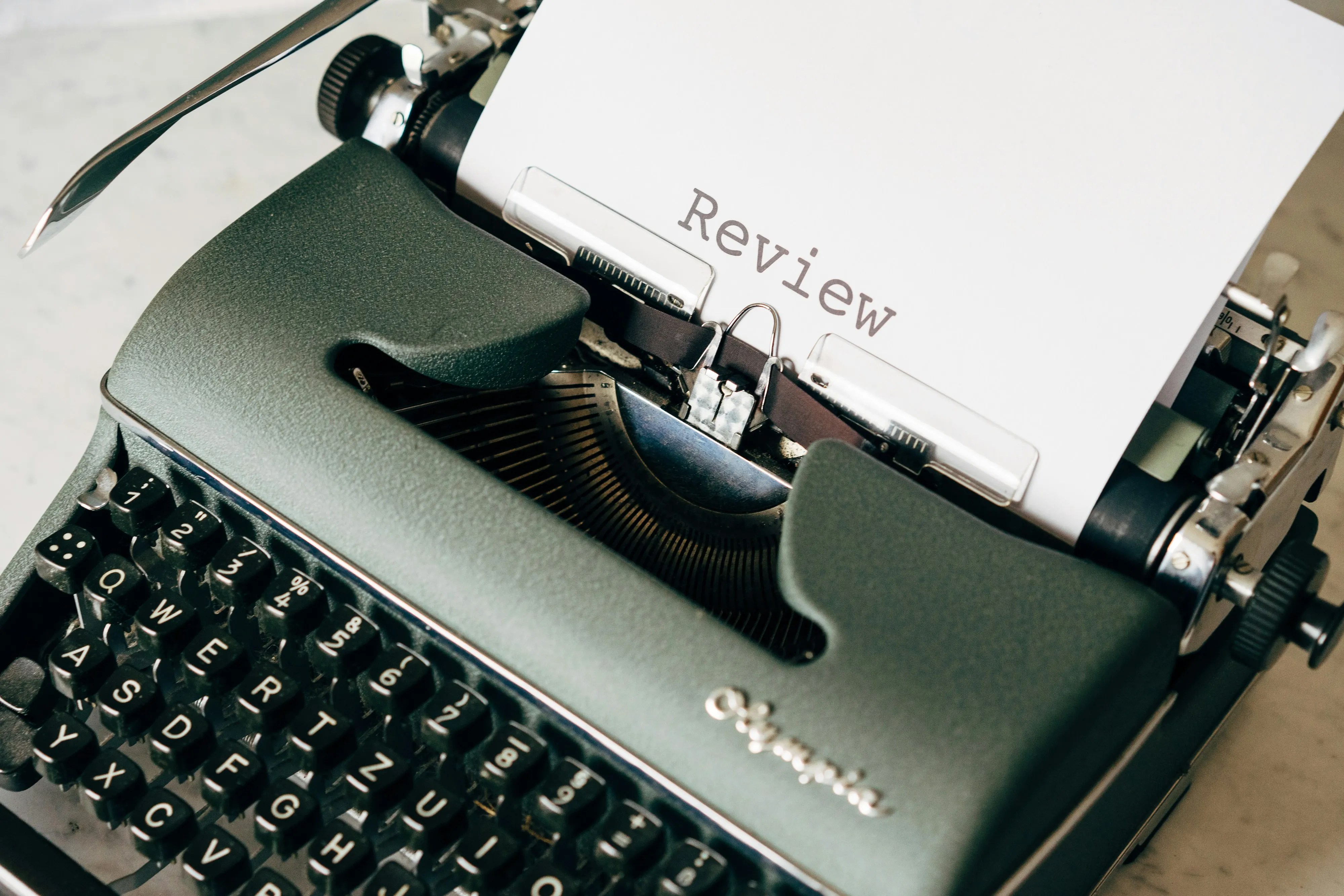
Photo by Markus Winkler on Unsplash
If you read my stuff or you know me personally, you know that (1) I wrote a book that I didn’t expect to be widely read, and (2) I work in publishing.
What you may not know is that a large part of my job is pitching books to influencers who may want to review them, which if nothing else, makes me very aware of how the process works.
Enter my ego.
The email . . .
You can imagine my excitement when I opened my email one morning to find someone requesting to have her team review my book. *Jennifer* had me at the subject line: “When cringe turns into courage and why Inked Up deserves more eyes than it has.”
*For the purpose of this article, I’m referring to Jennifer as female since it typically is a female name. That said, I don’t believe gender is binary. And the name is beside the point because I’m pretty sure no real Jennifer was involved and the name was changed to protect the not-so-innocent.*
Jennifer then went on to talk about specific points in my book that really sounded like she had read it. She told me she has a team of reviewers that she’d love to share the book with, and they fully trust her recommendations. Jennifer also assured me she didn’t charge the authors.
My ego sucked it all up.
Now let’s look at the red flags:
- The email came to my work email (which I reasoned away as my personal email is too hard to find — even though I now remember I have a website). I did forward it and all communication was through my personal Yahoo account.
- The email came from a Gmail account.
- At least in my (extensive) experience, people don’t pitch authors to review their books, it’s usually the other way around or the reviewer just reviews it.
Ego in charge . . .
My first inclination was to look up the name of the reviewer, like anyone would do. And wouldn’t you know, there were a couple each of reviewers and authors of that name.
And there are legit paid services out there.
I wanted to know more. So, when she asked what I wanted readers to come away with after reading my book, I didn’t hesitate to answer with a response that was already public.
And then . . .
She wrote back.
The response came quickly. It addressed what I had written about motivation and then pretty much rehashed exactly what the first email said. Jennifer said that if I were interested, she would explain the process to me in a subsequent email.
So again, I asked for more information and this time I mentioned that I couldn’t believe a service like this wouldn’t have some sort of fee.
The next response came quickly in which she said she appreciated and understood my question but assured me that she doesn’t charge authors. There is, however, a cost for a “reader appreciation token.” What that was I could only guess because she certainly wasn’t explaining it to me at that point.
She also requested a PDF of the book.
Of course, I asked for more info again and if I could send the eBook rather than a PDF. Since I self-published through Amazon KPS, I could send the digital version with little effort.
At this point my ego was still running the show. I mean, I could spend like $100 for the 122 reviews she was promising me . . .
Let’s look at the red flags:
- Once I thought about it, I realized that everything she said about the book was just a rehash of my author bio.
- I’ve worked with AI enough in my professional life to pick up on what is very likely AI writing, and this was definitely that.
- Publishers never give out PDFs of books. The published eBook, yes, but an actual PDF doc that can be manipulated, no.
- If she didn’t charge the authors, how was there a reader appreciation token?
“You’re drunk, ego, go home” — My brain.
The next email came with prices and a full explanation of how things worked. That’s when my brain totally took over.
I would pay a crew leader who would distribute the appreciation tokens to the readers. So it was “technically true” that Jennifer herself wasn’t charging for the reviews. You know, if any of it was even remotely true.
The appreciation tokens went like this. I could start with as little as 10 readers for a mandatory “appreciation” of $10 per reader and go as high as 100 reviews for the mere “appreciation” of $25 per reader.
They would not be considered paid reviews because the cost was more of a tip (albeit required) and they were going to be authentic with no promise of being positive.
More red flags:
- That ridiculously high mandatory appreciation token — not fee — token.
- I’ve solicited paid reviews and I’ve never once asked them to be anything but completely authentic and honest.
- Not once in any of the emails did she specify any credentials that could be verified.
- The same stiff, repetitive language.
- The emphasis on the funds not going through her personal account.
The end . . . or is it?
I wanted to write something snarky back and while it would have felt pretty good, it wouldn’t have done any good. I decided not to respond at all.
But within hours, a follow-up arrived. I responded, politely declining in just a few words.
But then . . .
Another one came. This one said she respected my decision, but could I let her know why I was passing so that she could figure out a way to work with me?
I responded with this, which I hoped was not enough info to make the scam better but enough for her to leave me alone (before I had to block them):
These are clearly paid reviews, regardless of if they are guaranteed positive or not, as well as requiring mandatory high-priced “appreciation tokens” is not an industry practice. So, while technically you aren’t charging the author, you are.
Plus, you provided absolutely no credentials that could be verified.
Overall, this seems like a pretty big scam. But it did make my ego feel good for a quick minute.
The next day I received another email saying she understood how I felt and appreciated my honestly. That said, she assured me that this was the perfect time to promote the book and she really could help. She’d love to send me examples of authors her crew had worked with. Because what’s the harm in clicking links or downloading things from an email that’s likely a scam.
And to nobody’s surprise, the email was full of the same, repetitive language.
It’s been a few days . . .
I haven’t heard anything since that last email and I’m not sure I will. I have found similar scams with similar names reported online, which I probably would have found had I searched the right terms in the beginning.
The email did exactly what it was intended to do: it stroked my ego. And while my brain understands that Inked Up will never be a NYT best-seller and this was definitely attempted fraud, my ego still holds out hope.
 Hi, I'm Gia.